
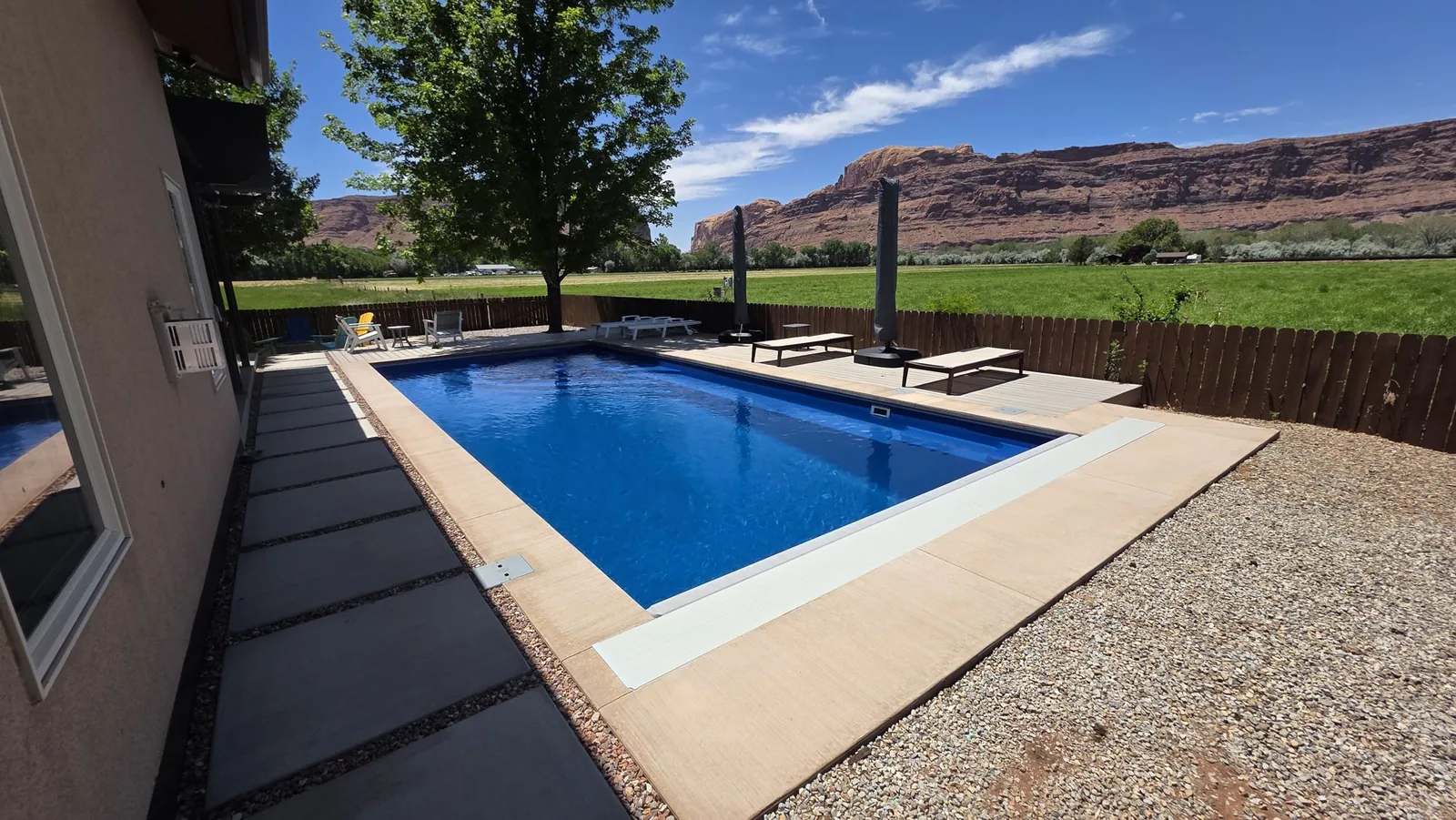
A pool that respects the water it holds.
Low impact leisure is how we describe the way we build. Every part of a Backspace pool, from the shell to the pump to the cover, is chosen to cut water loss, power use, and chemical use in a dry climate.
The water math
Swap the lawn for a pool and use less water.
A cool-season lawn in southeastern Utah needs steady irrigation from spring to fall. A pool loses most of its water to evaporation, and a closed cover stops about 95 percent of that.2
Run the numbers with regional evaporation data and a properly managed Backspace pool uses about one eighth of the water of the lawn it replaces.3,5 Pulling out turf and putting in a pool can be a conservation move.
Relative yearly water use. Based on Western Regional Climate Center pan evaporation data and IFA lawn watering guidance.
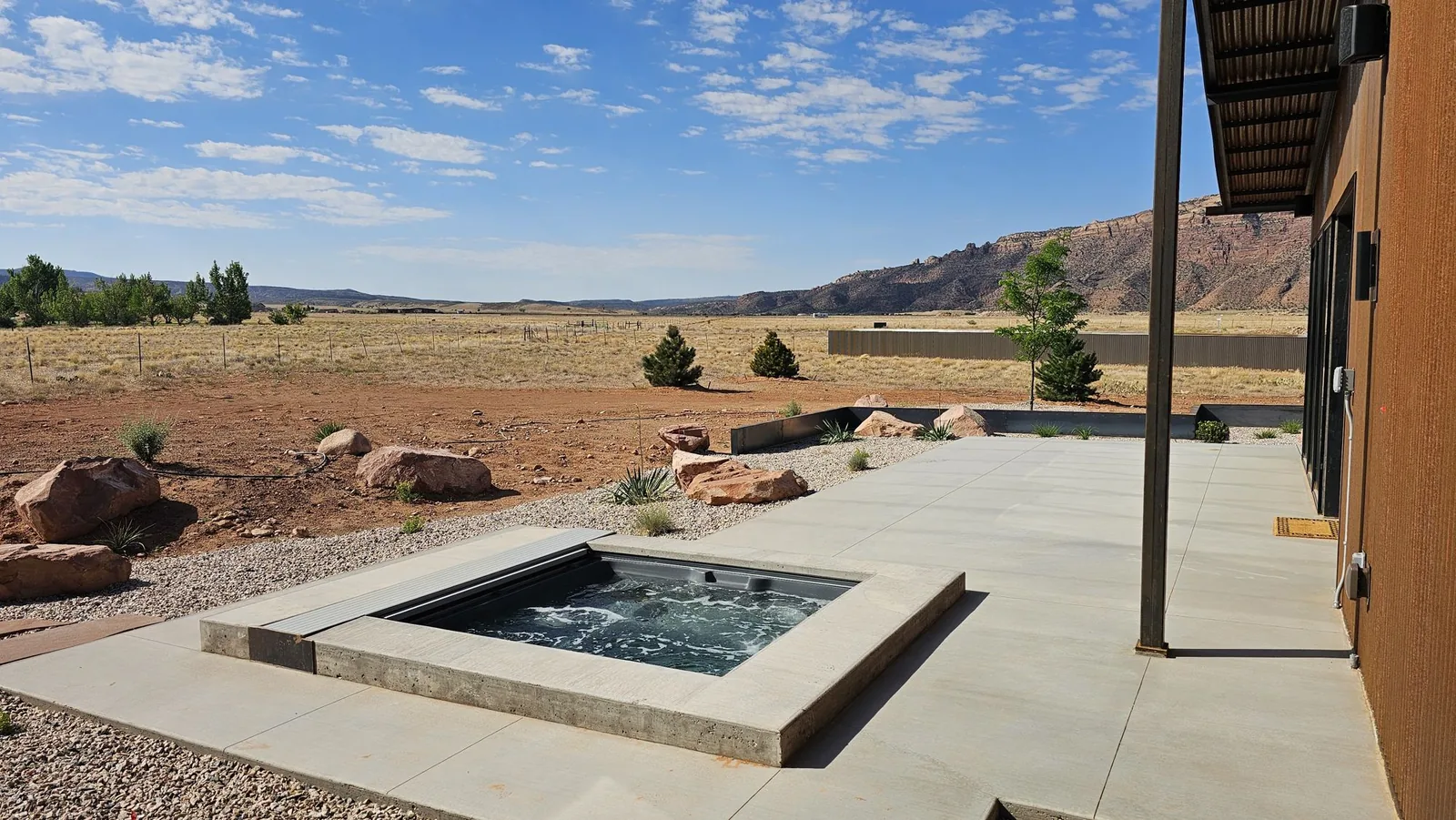
Standard on every pool
Automatic covers come with every pool.
We don’t install a pool without one. After the shell, the cover is the biggest line on the quote, and it pays you back in water, chemicals, and time.
Safety
You decide who gets in the water. Kids, yours and the neighbors’, can’t swim unless you open it, and wildlife stays out too. A compliant safety cover can count toward the barrier your local code requires. We confirm what applies to your lot.
Evaporation
A closed cover stops about 95 percent of evaporation. In Moab’s dry air and wind, that is the single biggest water saving a pool can make.2
Chemicals
Up to 90 percent less chemical use. Blocking UV and evaporation keeps chlorine in the pool doing its job.
Maintenance
Blow sand that never lands in the pool never has to be vacuumed out. Cleaner water also means shorter pump run times.
Equipment
Equipment that sips power.
The pump used to be the second biggest power draw in a house with a pool, right behind the air conditioner. Not anymore.
Variable speed pumps
Ours run at about 80 watts during normal circulation and can cut pump electric costs by up to 75 percent. They’re quiet enough that most people forget they’re running.
Cartridge filters
Reusable cartridges filter finer than sand and never need backwashing, so no water goes down the drain to clean them. The water is clearer and the pump works less.
Automation
Control the pump, lights, heat, and chlorine output from your phone. Filtration runs on its own schedule, so you never have to remember to switch it on.
Salt and Orenda water care
A salt system makes chlorine right in the pool, so there are fewer jugs to manufacture, ship, and store. The Orenda program keeps water balanced without harsh additives.
Solar first heating
When you want warmer water, solar is our first recommendation. If your site can’t take it, we rank the other heating options by efficiency and walk you through the tradeoffs.
Insulated plumbing
Any pipe that carries heated water gets wrapped. The heat you paid for stays in the line on its way back to the pool.
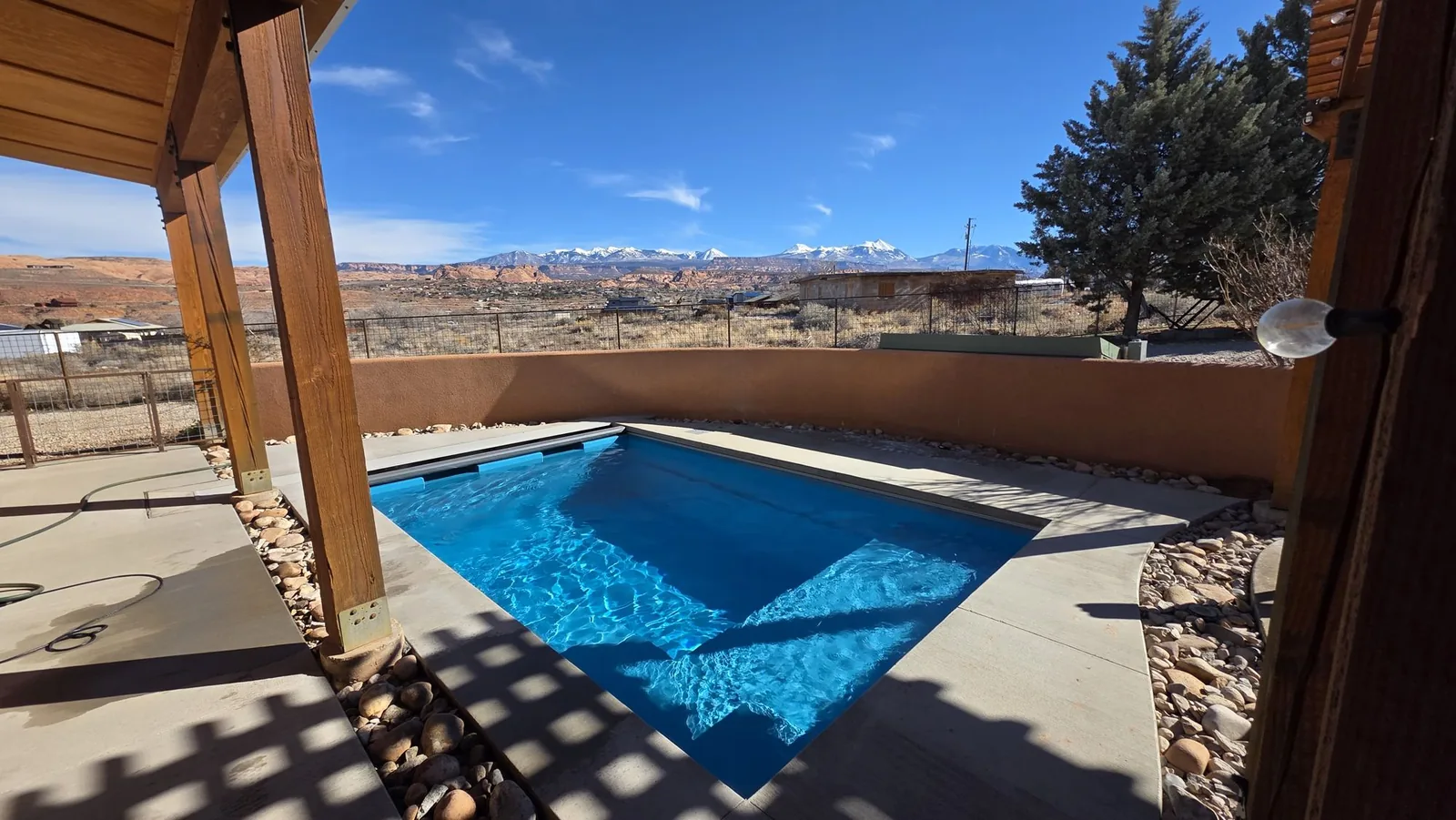
The shell
Fiberglass shells that hold up.
We install shells from Leisure Pools and San Juan Pools. Leisure’s Composite Armour construction gives a strong, watertight, non-porous shell that resists staining and algae.1
Fiberglass never needs replastering and it is gentle on skin and feet. Paired with salt water, it makes for easy, comfortable swimming that lasts.
We offset your pool’s first ten years of carbon before it arrives.
Before your shell is delivered, we offset the estimated carbon emissions from its first decade of operation, based on published footprint estimates for residential pools.4
Sources
References
1. Leisure Pools USA. Composite Armour core of strength. leisurepoolsusa.com
2. Muleta, M. (2016, January). Cal Poly study: Effectiveness of pool covers to reduce evaporation from swimming pools. National Plasterers Council. npconline.org
3. Western Regional Climate Center. Mean monthly pan evaporation. wrcc.dri.edu
4. Yin, H., and Frey, H. C. (2015). Estimating water, energy, and carbon footprints of residential swimming pools. researchgate.net
5. Intermountain Farmers Association. Lawn watering guide. grow.ifa.coop